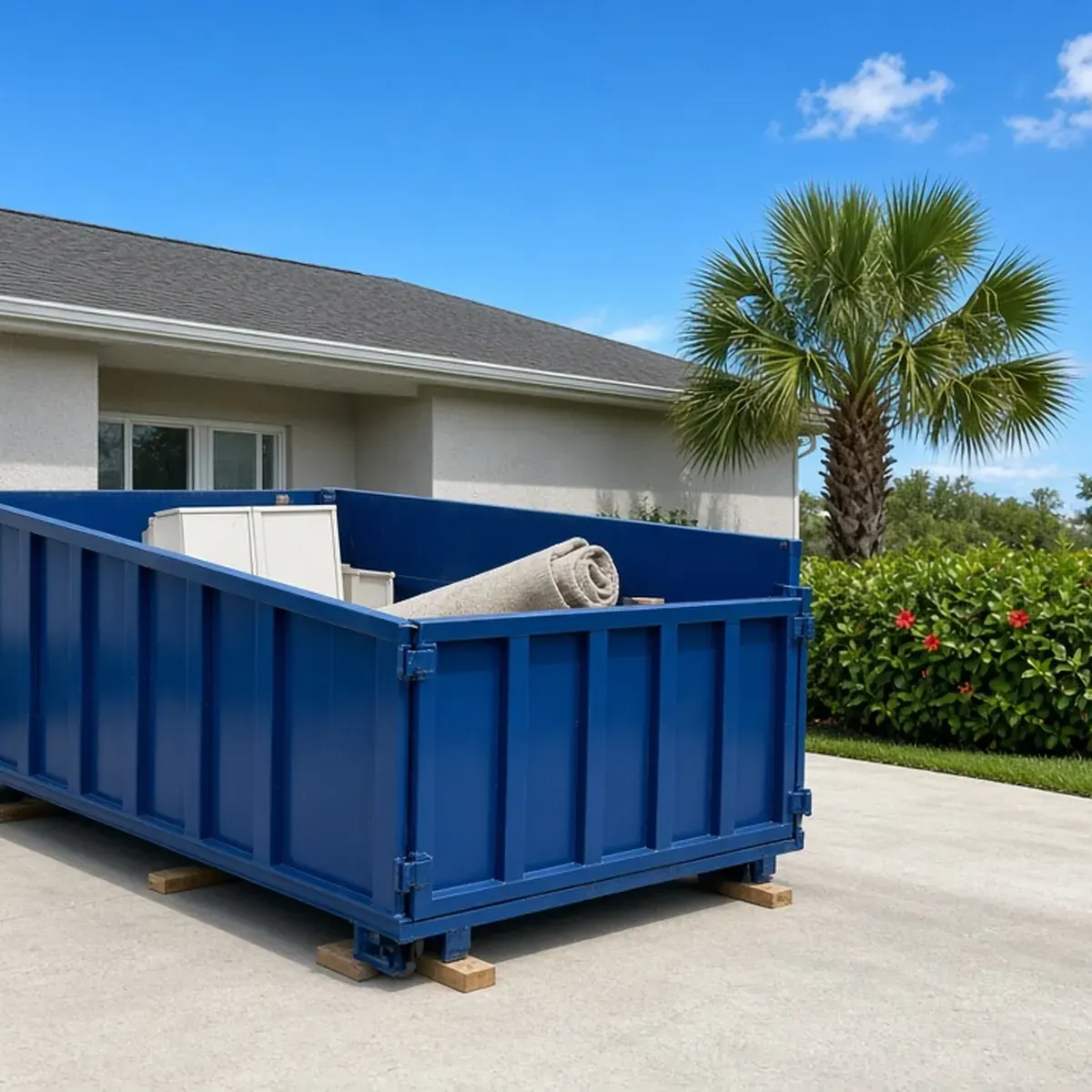
Port Charlotte is a place of single-family houses, and many of them are not new. The Census Bureau's American Community Survey (2020-2024, table S2504) counts 27,888 occupied homes in Port Charlotte, and about 88% are single-family detached houses. About 43% of those homes were built from 1980 to 1999 and about 37% from 1960 to 1979, while only about 3% date from 2010 or later. Census QuickFacts lists a median value of $269,900 and 2.34 people per household (2020-2024). Houses that are 30 to 65 years old need roofs, flooring, cabinets and bathrooms replaced, and those are the jobs we match to a container.
Weight often sets the size more than volume. Charlotte County's landfill on Zemel Road in Punta Gorda lists a tipping fee of $49.88 per ton for waste generated in the county and $99.74 per ton for waste from outside it. The county's page adds that haulers of construction and demolition debris must give the building permit number for the source site, and a load without a valid number is billed at the higher rate. If your project is permitted, keep the number handy when you call.
Rain changes the load too. NOAA's 1991-2020 normals for the Port Charlotte 6.2 W station (US1FLCH0013) show 58.16 inches of precipitation a year, with 27.97 inches in the summer months. Wet shingles, lumber and brush weigh more when they are tipped at the scale, so we tell you when a tarp is worth using.
Storm seasons bring their own surge of debris. The National Hurricane Center's report on Hurricane Ian says the storm made a second landfall near Punta Gorda on September 28, 2022, and reports at least 200 homes destroyed in Charlotte County. When a storm leaves limbs, fencing and soaked drywall at your property, our hurricane debris cleanup guide explains what to sort first.